
Lubricating Eye Drops 101: How to Find Long-Lasting Relief for Dry, Irritated Eyes
If your eyes feel gritty by mid-afternoon, sting after a long day of video calls, or just never seem to feel fully “hydrated,” you are far from alone. In fact, dry eye can affect anyone of any age, with a higher incidence rate found in woman, when you factor in aging and hormonal changes.[1]
Dry eye may result from our daily realities, such as prolonged screen time, contact lens wear, air-conditioned and heated homes/offices and seasonal allergies. As the tear film dries out, symptoms such as burning, itching, tearing, and foreign body sensations may occur. While many people may dismiss these symptoms as normal, persistent symptoms may indicate the need for additional lubrication and care.
Lubricating eye drops are often the first choice of relief from dry eye symptoms. However, with so many options available online, choosing an eye drop can be challenging.
Good news! We are here to guide you through what to consider when choosing eye drops, so you can make an informed decision for long-term eye comfort.
How Lubricating Eye Drops Can Help
Lubricating eye drops, also known as artificial tears, supplement the natural tear film by providing moisture to the surface of the eye.
The most effective formulations help stabilize the tear film, reduce friction during blinking, and provide long-lasting comfort throughout the day.
Understanding Preservatives and Why It Matters
Preservatives are added to multi-dose eye drop bottles for a practical reason: once a bottle is opened, it is no longer sterile. The preservatives allow the same bottle to be used safely for several days or weeks after opening, while preventing bacterial growth. One of the most common preservatives used in eye drops is benzalkonium chloride, often referred to as BAK.
Preservatives such as BAK are effective at controlling bacterial growth, but research has shown that repeated, long-term use can cause harm to the surface of the eye, destroy the natural tear film, and cause intolerance reactions [2]. In particular, exposure to preservatives can cause additional discomfort such as itching, burning, foreign-body sensation, and increased dryness, all the symptoms you are trying to relieve in the first place with a lubricating eye drop. [3]
To break this cycle, preservative-free formulations have been developed as a solution for long-term dry eye management. Preservative-free eye drops provide lubrication without exposing the tear film to additional ingredients that may cause irritation.
Unidose Vs Multidose Bottles
Even among preservative-free options, not all are packaged in the same way. Traditional preservative-free single-use plastic vials, also called unidose, maintain sterility without added preservatives. Designed to be opened, used, and discarded immediately to minimize bacterial growth, they may be practical for occasional users. However, they have a short shelf life once opened, are costly per use, create more waste, and can be challenging to administer.
Preservative-free multi-dose eye drop bottles offer several advantages over single-use vials. Using specialized valve or filter systems, they maintain sterility without the need for preservatives, while providing long-term and continual supply of lubricating eye drops. Multi-dose bottles are more convenient for daily use, practical to apply, and a cost-efficient treatment option for long-term dry eye relief.
What Ingredient Should You Look for in a Lubricating Eye Drop?
When it comes to dry eye relief, understanding preserved versus preservative-free is only one part of the picture; the ingredients found inside the bottle matter too. For dry eye relief, one ingredient in particular stands out: sodium hyaluronate.
Sodium hyaluronate, one of the most effective ingredients found in modern day lubricating eye drops, is the sodium salt of hyaluronic acid, a substance found naturally in the eye. Sodium hyaluronate provides a stable, long-lasting, and lubricating film on the surface of the eye.
However, not all sodium hyaluronate is created equal.
Interestingly, the properties of sodium hyaluronate are driven by the length of the molecular chain. The longer the chain, the higher the molecular weight, the higher the quality, which means longer-lasting lubrication.
When sourced and manufactured to the highest quality standards, sodium hyaluronate provides a stable hydrating layer for long-lasting comfort and relief. This can be especially beneficial for people who experience moderate to severe dry eye symptoms or spend long hours looking at digital screens.
Choose Quality, Choose CandorVision®’s HYLO®!
HYLO® preservative-free lubricating eye drops are formulated with high molecular weight sodium hyaluronate, providing an immediate, viscous, long-lasting lubrication for prolonged and daily comfort. HYLO® comes in a preservative-free, multi-dose, German-engineered, airless pump system, which delivers one drop at a time. This preservative-free technology allows HYLO® to be sterile for 6 months after first use.
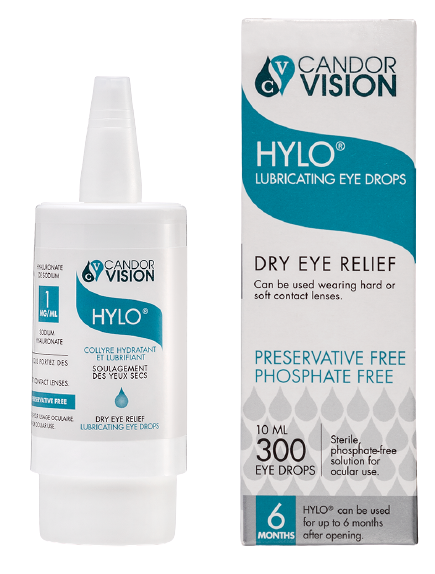
HYLO® is available in two pack sizes to fit your dry eye relief needs: HYLO® mini a 150-drop starter pack at a starter price and HYLO® 300-drop value pack, designed for longer-term, everyday use.
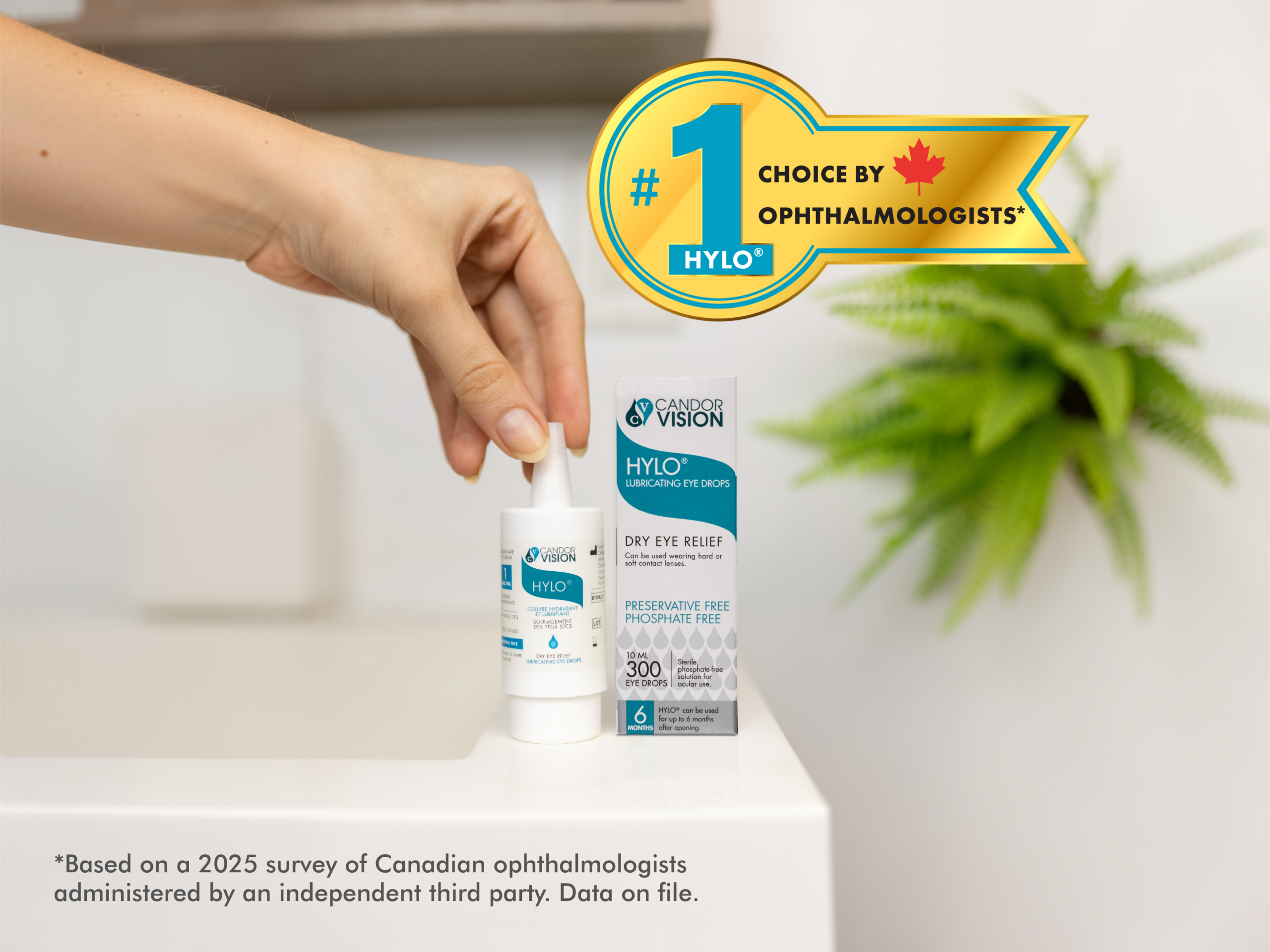
HYLO® is the #1 choice by Canadian ophthalmologists for lubricating eye drops recommended to their patients, according to a 2025 survey conducted by an independent third party. Moreover, 2 out of 3 ophthalmologists trust and personally use HYLO® for themselves and / or their families.
Shop HYLO® on Well.ca and feel the difference with HYLO® mini and HYLO® today!
ABOUT CANDORVISION®
CandorVision® (a division of CandorPharm® Inc.) is a Canadian-owned and operated company that develops and markets the highest quality ophthalmic medical devices for dry eye and lid hygiene treatment for the Canadian market. CandorVision® provides cutting-edge technology to health professionals, developed with the protection of our environment and environmentally compliant techniques in mind.
References
- Ophthalmology Times. Understanding prevalence, demographics of dry eye disease. Eye Care Network. Published 2024.
- Ophthalmology Management. Benzalkonium Chloride and Its Effect on the Ocular Surface. Published 2024.
- Baudouin C, Labbe A, Liang H, Pauly A, Brignole-Baudouin F. Ocular benzalkonium chloride exposure: problems and solutions. Eye (Lond). 2021;35(7):2041-2055.

You wake up and your stomach feels good, comfortable and flat. But as the day goes on, it feels like

One of the few things we’d bet most people can agree on? We’re just not getting enough water. No
Sponsored By Ceder's Distilled Non-Alcoholicwell.ca/brand/ceders.html