
Prenatals 101: Navigating the World of Prenatal Vitamins

Getting ready to welcome a new family member is exciting, and looking after your health and your baby’s is a big part of your preparations. Prenatal vitamins can help, but with so many options available, deciding which prenatal to take can feel overwhelming.
Whether you’re planning ahead or already pregnant, this Prenatals 101 guide walks you through the basics of prenatal supplements, with a few Well.ca picks along the way to help you make the right choice.
Key Takeaways
- Prenatal vitamins are daily multivitamins formulated for the higher nutrient needs of preconception, pregnancy, and breastfeeding.
- Health Canada recommends 0.4 mg (400 mcg) of folic acid daily for anyone who could become pregnant, ideally starting at least three months before conception.
- A prenatal with 16 to 20 mg of iron, paired with a balanced diet, meets the 27 mg daily total Health Canada sets for pregnancy.
- Missing an occasional dose isn’t cause for alarm, but consistent gaps raise the risk of neural tube defects and iron-deficiency anemia.
What Are Prenatal Vitamins?
Prenatal vitamins are daily multivitamins made for the extra nutrient needs of preconception, pregnancy, and breastfeeding. Health Canada recommends taking one because food alone rarely covers those higher needs, even with a well-balanced diet.
Iron is a good example. Your blood volume grows by about 20% to 30% during pregnancy, so you need extra iron to keep up. Folic acid is also important because it helps your baby’s brain and spinal cord form properly in the first four weeks after conception, often before you even know you’re pregnant.
Health Canada advises that the best time to start taking a prenatal vitamin is at least three months before you try to conceive, so folate has time to build up before your baby’s brain and spinal cord start forming.
Read More: When Should You Start Taking Prenatal Vitamins?
What’s In Prenatal Vitamins? Essential Nutrients Explained
Most prenatal vitamins are built around five nutrients: folic acid, iron, calcium, vitamin D, and omega-3 fatty acids. The table below shows how much of each you need daily during pregnancy, based on Health Canada guidance.
| Nutrient | Total daily need (food + supplements) | From your supplement | What it does |
| Folic acid | At least 0.4 mg (400 mcg) | 0.4 mg (400 mcg) | Helps prevent neural tube defects |
| Iron | 27 mg | 16 to 20 mg | Supports increased blood volume |
| Calcium | 1,000 mg | Varies (usually a small amount) | Builds baby’s bones and teeth |
| Vitamin D | 600 IU (15 mcg) | At least 400 IU (10 mcg) | Helps your body absorb calcium |
| Omega-3 (DHA) | About 300 mg, plus 150 g of fish weekly | About 300 mg (often a separate softgel) | Supports baby’s brain and eye development |
“Total daily need” is what you’re aiming for from food and supplements combined, while “From your supplement” is the amount to look for on your prenatal’s label. Beyond the nutrients themselves, always look for the eight-digit Natural Product Number (NPN) on the label, which means Health Canada has licensed the product for sale in Canada.
Your prenatal and your diet work together to cover what you and your baby need, and that’s especially true for choline. It’s one of the most common nutrient gaps in pregnancy, even when you’re taking a prenatal. According to Dr. Carly King, a licensed naturopathic doctor, “Choline is essential for neural tube and fetal brain development, helping to form cell membranes and produce acetylcholine, a neurotransmitter involved in memory and attention.”
You need 450 mg of choline a day during pregnancy, “which is about 3 eggs,” according to Dr. King, and it’s easy to fall short. “Many prenatal vitamins contain little, if any, choline,” she says, and food doesn’t always fill the gap. “Eggs are the richest source of dietary choline but if women are not eating eggs daily, it can be difficult to achieve choline goals.” Salmon and beef add some choline too, but if eggs aren’t part of your daily routine, ask your doctor or pharmacist whether a separate choline supplement makes sense.
What Happens If You Don’t Take Prenatal Vitamins?
Missing an occasional dose of your prenatal vitamin isn’t cause for alarm. Consistency over months is most important. Low folate in early pregnancy raises the risk of neural tube defects like spina bifida, and ongoing low iron intake can lead to iron-deficiency anemia.
If you only started a prenatal once you found out you were pregnant, that’s common, and taking one from that point on still supports you and your baby through the rest of your pregnancy. If you miss a day, take your next dose as usual. Don’t double up on doses, since taking extra can push nutrients like vitamin A past safe limits.
Nausea can make a daily prenatal hard to keep up with. Taking yours with a meal or right before bed can ease stomach upset. If one prenatal still doesn’t sit well, try another one. Formulas with a gentler form of iron, like bisglycinate, can be easier on your stomach.
Well.ca’s Top Prenatal Picks
It helps to start with a short list. These five prenatals each suit a slightly different need, so you can find a good fit without the guesswork.
Bird&Be Complete Prenatal Pack
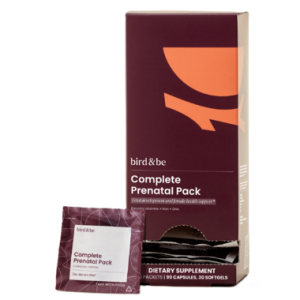
Bird&Be Complete Prenatal Pack conveniently puts your daily prenatal, iron, and omega-3 in a single sachet. Each sachet holds two multivitamin capsules, a separate 27 mg iron capsule (ferrous bisglycinate), and an algae-based softgel with 300 mg of DHA. The multi provides 1 mg of folate (folic acid plus 5-MTHF, an active form of folate), 1,000 IU of vitamin D3, 220 mcg of iodine, and 150 mg of choline. It’s vegan and a good fit if you’d rather not buy omega-3 separately.
CanPrev Prenatal Multi
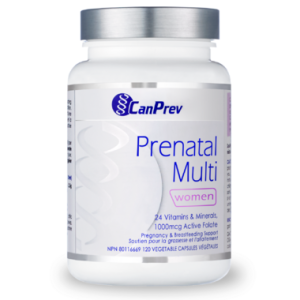 CanPrev Prenatal Multi is made in Canada and covers 24 vitamins and minerals. Four capsules daily provide 1 mg of folate as 5-MTHF, 400 IU of vitamin D3, and 220 mcg of iodine. At 45 mg, it’s the highest dose of iron on this list, so it’s well suited to anyone whose healthcare provider has recommended extra iron.
Thorne Basic Prenatal
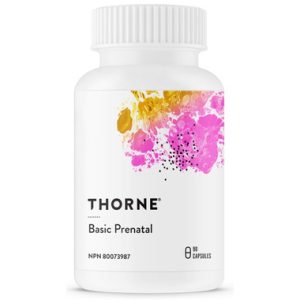 Thorne Basic Prenatal uses folate as 5-MTHF alongside iron bisglycinate (Ferrochel), a gentle form of iron. You take one capsule twice a day with food. Thorne says it keeps the nutrient amounts moderate so it’s gentler on your stomach, which makes it worth trying if nausea has made other prenatals hard to keep down.
MegaFood Baby & Me 2
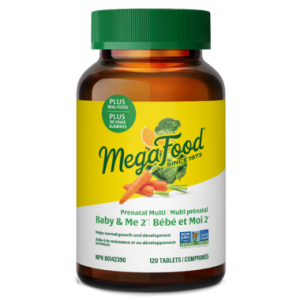 MegaFood Baby & Me 2 has 600 mcg of folate (5-MTHF), 18 mg of iron, 600 IU of vitamin D3, and 150 mcg of iodine in two tablets daily. It also includes 300 mg of choline, a higher amount than many prenatal multis. It’s vegetarian, gluten-free, and tested free of herbicides and pesticides.
Find more prenatal vitamins at Well.ca
Pure Encapsulations PreNatal Nutrients
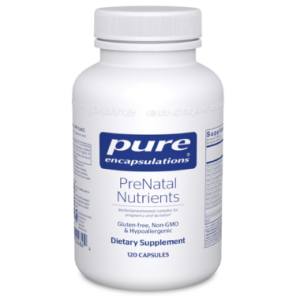 Pure Encapsulations PreNatal Nutrients is a hypoallergenic formula in vegetarian capsules, making it a good option if you have food sensitivities. Two capsules daily provide 1,000 mcg of folate as Metafolin (5-MTHF), 27 mg of iron bisglycinate, 1,000 IU of vitamin D3, 150 mcg of iodine, and 100 mg of choline.
Find more prenatal vitamins at Well.ca.
Frequently Asked Questions
What Are Prenatal Vitamins For?
Prenatal vitamins fill the nutrient gaps your diet leaves during pregnancy. They support your baby’s early brain and spinal cord development and your own increased blood volume.
Is There a Downside to Taking Prenatals?
The iron in prenatals can cause mild stomach upset or constipation. Taking your prenatal with food or choosing a gentler form of iron, like bisglycinate, usually helps.
When Should You Start Taking Prenatal Vitamins?
You should ideally start taking prenatal vitamins at least three months before you start trying to conceive, so folate has time to build before the neural tube forms. If you’re already pregnant, start taking a prenatal vitamin as soon as you can.
Choose Your Prenatal With Confidence
Comparing label amounts is the best way to ensure you and your baby get the right support at every stage. Once you’ve checked off the essential targets, choose a formula you can take consistently, and don’t hesitate to check in with your doctor, pharmacist, or midwife for more personalized advice.
Ready to find the right prenatal for you? Explore Well.ca’s full range of prenatal vitamins from trusted brands.
This article is for informational purposes only and isn’t a substitute for professional medical advice. Talk to your doctor, midwife, or pharmacist before starting any new supplement, especially if you’re pregnant, breastfeeding, have a health condition, or take other medications.

Happy Earth Month! We’re trying to use this month to think about how we make greener choices f

While vitamins A to E may be common names in your natural health medicine cabinet, vitamin K2 might

The holidays are just around the corner, which means that it’s time to start making your holiday
Leave a Reply