
Why Does My Acne Get Worse in the Winter? What’s Really Behind Cold Weather Breakouts
As fall and winter cold sets in, the skincare routine that kept your face clear all summer suddenly leaves you with flaky skin and angry breakouts. You might be wondering why your acne gets worse in the winter when you’re barely sweating. The truth is, your winter skin needs a completely different skincare routine to stay hydrated and healthy. Winter acne is a skin barrier problem, and you can fix it with a few smart routine swaps.
Keep reading for expert tips on how to change your winter skincare routine to avoid dry skin and breakouts.
Key Takeaways
- Winter acne is primarily driven by skin barrier damage and severe moisture loss in cold, dry climates.
- Switching to a gentle cleanser and using harsh active ingredients less often is an easy first step to protect your skin from winter breakouts.
- Indoor heating systems dry the air in your home, but a humidifier can increase humidity and help prevent cold-weather acne.
- Heavy moisturizing creams and ointments can trap oil and bacteria, so people with acne-prone skin should choose non-comedogenic ceramides instead.
Why Does Acne Get Worse in the Winter?
Acne affects roughly 5.6 million people in Canada. For many, it worsens in winter because cold outdoor air and indoor heating can damage your skin barrier, while heavy moisturizing products used to fight dryness can clog your pores.
Here are a few common reasons you experience this skin irritation during the winter:
Cold, Dry Outdoor Air
Sub-zero winter air holds very little moisture. This dry air pulls water directly out of your face. This moisture loss weakens your skin barrier, increasing irritation and inflammation that ultimately lead to uncomfortable skin and winter breakouts. Without sufficient moisture in your skin, the enzymes that normally help you shed dead cells stop working properly, causing dead skin to build up and block your pores.
Indoor Heating
Forced-air heat keeps indoor humidity low all day. This dry indoor air also pulls moisture from your skin (just like outdoors). Health Canada recommends maintaining your home’s relative humidity between 30% and 35% during the winter to reduce water evaporation from your skin, support your skin’s natural moisture barrier, and help your winter skincare products absorb better.
Long, Hot Showers
It’s tempting to warm up with a steaming hot shower after being out in the cold all day. However, hot water strips away your natural protective oils. Your skin often responds to this aggressive heat by producing extra sebum to compensate. This extra oil quickly clogs your pores and triggers seasonal acne.
Heavier Moisturizers and Occlusives
When your skin feels tight, you might reach for a thick moisturizer. However, many of these rich creams and heavy balms used to fight winter dryness can clog your pores. Adding heavy, oily layers over top of dead skin cells is a recipe for trapped bacteria. Instead, if you need moisturizer, choose a non-comedogenic one.
Toques, Scarves, and Winter Layers
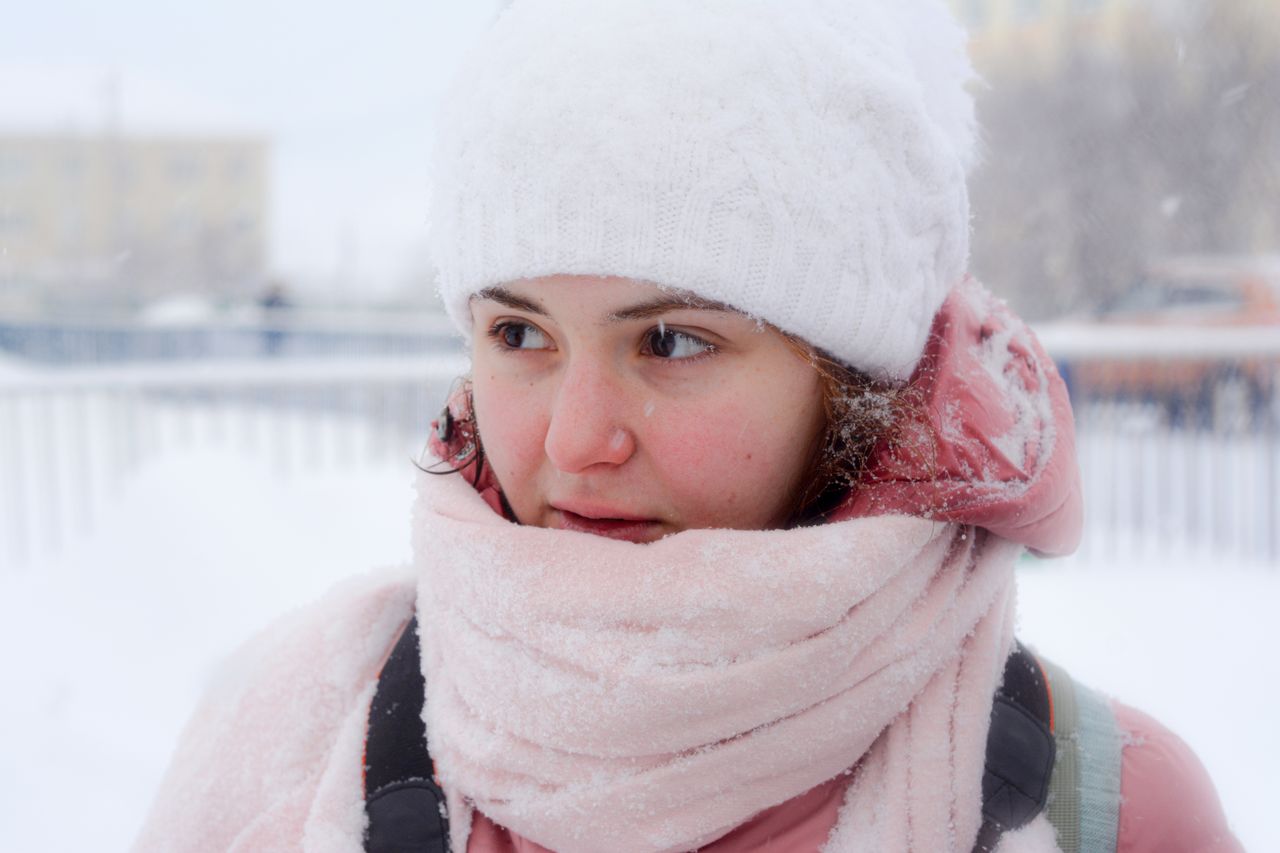
Winter fashion can contribute to seasonal acne. The constant friction from tight toques, heavy scarves, and thick high collars repeatedly rubs against your skin. This friction traps sweat, dead skin, and excess oil against your skin, exacerbating dry, acne-prone skin. If you’re noticing more pimples right where your scarf sits, your winter gear is likely the culprit. To avoid this, wash your winter wear more often, switch to natural and breathable fabrics, and avoid tight-fitting winter layers when possible.
Is It Winter Acne or Just Dry, Irritated Skin?
It can be hard to tell the difference between a true winter breakout and standard barrier irritation. If you’re dealing with acne in winter, you’ll see true pimples, blackheads, and whiteheads scattered across your face. Patches of rough, red, and flaky skin are more likely a barrier irritation.
Media aesthetician Julia Barabas suggests running your fingertips over your skin to tell the difference. “Acne has bumps to it, a blackhead, a whitehead, or a sore spot that hurts when you press. Dry, irritated skin feels flat and rough instead. It flakes, it feels tight after you wash, and your moisturizer stings going on. Plenty of people have both at once by January.”
Another way to tell the difference is the water test: Splash water or apply a small amount of basic moisturizer to your skin. If it immediately stings or burns, you likely have a damaged skin barrier. If you notice painful, deep cysts, persistent redness, or severe hormonal acne that refuses to clear up, talk to your dermatologist or doctor for a proper diagnosis.
How to Get Rid of Winter Acne Without Drying Out Your Skin
You can get rid of winter acne by switching to a low-foaming cleanser, adjusting how often you use active treatments, and applying non-comedogenic, barrier-repair moisturizers.
Switch to a Gentle, Low-Foam Cleanser
Many high-foaming face washes contain harsh sulphates that strip essential surface lipids from your skin. Give your skin a fighting chance by supporting its moisture barrier with a non-stripping cleanser. Look for a formula that easily emulsifies surface grime and makeup without leaving your skin feeling tight or dry.
Browse our selection of facial cleansers to find a hydrating, low-foam option that gently cleanses while protecting your skin.
Keep Your Actives, Adjust the Dose
You don’t need to stop using active ingredients like benzoyl peroxide or salicylic acid in winter. They work quickly, so they only need to stay on your skin for short periods. In winter, try applying these products for a shorter time than in summer (or as your dermatologist recommends), then rinsing them off.
“Using these products less often, or lowering the concentration of these ingredients can be helpful. For example, changing from a 2 percent salicylic acid toner to a 1 percent.” is another approach that Board-certified dermatologist Debra Jaliman, MD suggests to prevent the drying effects of active ingredients.
You can also use the “retinoid sandwich” method for topical retinoids in winter. This means applying a light layer of moisturizer, then your retinoid, then finishing with a second layer of moisturizer to lock in hydration and prevent dryness and flaking.
Find targeted support in our acne spot treatments collection.
Use Barrier Supporting Ingredients
Your skin barrier is the protective outer layer of cells and lipids that keeps moisture in and bacteria out. Lock in as much moisture as you can during the winter to support your skin barrier with ingredients like ceramides, niacinamide, and hyaluronic acid.
Avoid the “slugging” trend. Slugging is when you coat your face in a thick, heavy occlusive ointment, like Vaseline, as the last step of your skincare routine. It can help trap moisture, but if you already have dry or problematic skin, it can have the opposite effect, drying out your skin more and causing acne flare-ups. Instead, choose breathable hydration from our acne moisturizers and treatments.
Barabas shares that “A lot of acne-prone people skip moisturizer because they’re scared it’ll break them out. But in studies where people used acne medication along with an acne-friendly moisturizer, most saw fewer breakouts within four to eight weeks.”
As you shop for new skincare products for dry winter and acne-prone skin, it can help to understand common ingredients and how they support your skin health:
| Ingredient | What It Does | Winter Adjustment |
| Benzoyl Peroxide | Kills acne-causing bacteria | Switch to a short-contact therapy mask for two to five minutes |
| Salicylic Acid | Unclogs pores and removes dead skin | Reduce use to two or three times a week |
| Retinoids | Speeds up cell turnover to prevent clogs | Use the retinoid sandwich method to reduce flaking |
| Ceramides | Rebuilds the skin’s lipid barrier | Apply twice daily in a non-comedogenic formula |
| Niacinamide | Reduces redness and supports the barrier | Layer underneath your daily moisturizer for extra protection |
How to Prevent Acne in Winter
Preventing acne in winter requires a combination of gentle skincare and smart everyday habits. Stick to a gentle cleansing routine and lower the frequency of your active treatments to avoid irritating your skin. Use a non-comedogenic moisturizer and apply SPF daily.
At home, run a humidifier in your bedroom to counteract the drying effects of forced-air heat.
Another helpful skin health tip is to keep your daily showers brief and use lukewarm water rather than scalding hot. Remember to wash your toques, scarves, and pillowcases regularly using a fragrance-free detergent to keep hidden bacteria from resting against your face all day.
According to Barabas, the biggest mistake people make with their winter skincare routine is treating dry skin like oily skin. “People feel flaky, so they scrub. They get a pimple, so they add a stronger spot treatment or a toner. Each of those dries you out more, and dry skin makes extra oil, which clogs pores. That’s how a lot of people end up flaky and broken out at the same time.”
Ending the Frustration of Troubled Winter Skin
Navigating winter breakouts doesn’t have to be a frustrating cycle of dryness and irritation. With a few targeted changes to your skincare routine, you can protect your skin barrier and keep your complexion perfectly clear all season long.
Are you ready to start building your seasonal routine? It’s never too late to make your winter skincare a priority. Explore our full range of cold weather skincare at Well.ca and find exactly what your skin needs today.

Sponsored by Province Apothecarywww.provinceapothecary.com

As we approach our one-year quaranniversary, many of us have gotten used to the practicalities of ma
Luxury beauty is well…a luxury. It’s not something I use every day, nor is my entire beauty cabi